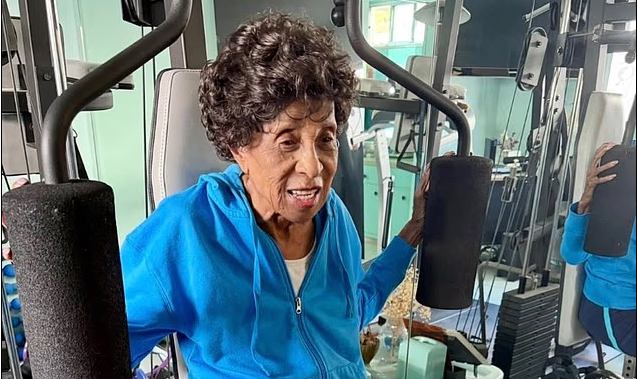
Marla Gibbs amazed fans this week after sharing footage of herself working out at the gym at 94 years old — nearly two decades after surviving a life-threatening brain aneurysm.
The beloved The Jeffersons actress appeared full of energy as she exercised with weights, proving age has not slowed her down. Alongside the inspiring clip, Gibbs encouraged followers to stay motivated, writing that as long as she is alive, there is still time to enjoy life and make positive changes.
Fans and celebrity friends quickly flooded the comments with praise for the five-time Emmy nominee’s determination and youthful spirit. Terry Crews enthusiastically cheered her on, while Arsenio Hall also applauded the actress for her dedication.


Gibbs became a television icon through her role as Florence Johnston, the sharp-tongued maid on The Jeffersons, where she starred alongside Sherman Hemsley, Isabel Sanford and Roxie Roker from 1975 to 1985. She later reprised the character in the spinoff Checking In and also found success on the sitcom 227.
Throughout her long career, Gibbs has appeared in numerous popular series, including The Fresh Prince of Bel-Air, Martin and A Different World. More recently, she has made guest appearances on Young Sheldon, One Day at a Time and Chicago Med.


In her memoir It’s Never Too Late, Gibbs candidly reflected on the devastating aneurysm she suffered in 2006 and the difficult road to recovery that followed. She revealed that doctors feared for her survival and described the physical and emotional struggles she endured during rehabilitation, including repeated falls as she insisted on regaining her independence.
The actress admitted there were moments when she questioned whether her career had ended after seeing how much the illness had changed her physically. Still, Gibbs said something inside her kept telling her that her story was not over.
She ultimately poured all her energy into healing, explaining that recovery demanded immense physical, mental and spiritual strength. Gibbs also shared that learning to accept where she was in the process became one of the most important parts of her recovery journey — and eventually helped her return to acting once again.