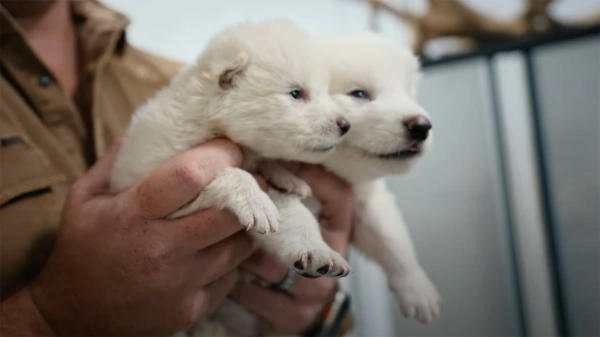
Dallas-based biotech and genetic engineering company Colossal Biosciences has announced the “creation” of three dire wolves. The species went extinct 12,000 years ago and was popularized by the TV series Game of Thrones, Bloomberg reports .
The company reported on three individuals weighing about 36 kg. These are two males, Romulus and Remus (the names of the legendary founders of Ancient Rome . — RBC Life ), as well as a female, Khaleesi (she was named after Emilia Clarke’s character in Game of Thrones).
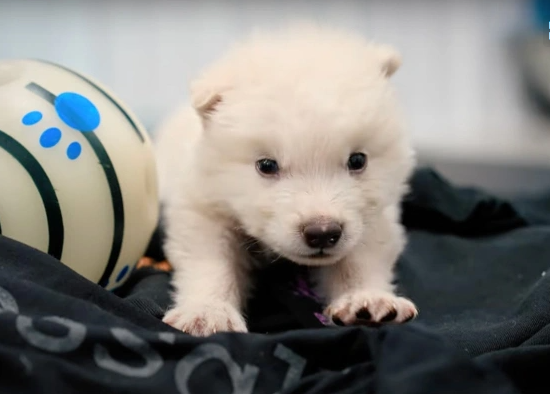
The company claims that the cubs are in a fenced reserve in the United States (the exact geographic location is not disclosed). They are fed beef, venison, horse meat and specially formulated food. The males are approximately 20-25% larger than an ordinary wolf at their age. At maturity, the “reborn” animals will weigh 63.5 kg.
The DNA of the dire wolf was isolated from samples found in US museums: a skull that is about 72,000 years old and a tooth from an animal that died 13,000 years ago. The scientists then made about 20 corresponding edits to the genome of the common wolf, editing was aimed at creating such dire wolf traits as a larger mass, larger muscles, and white fur. The edited cells were placed in the eggs of domestic dogs, which were then implanted into surrogate mothers – hybrids of large hounds.
The company also claims to have cloned two litters of red wolves, an endangered species. The biotechnologists used a new non-invasive blood cloning method, and the resulting cubs were named Hope, Blaze, Cinder and Ash.
Earlier, Colossal Biosciences announced the success of the test before the “resurrection” of the mammoth (the species became extinct about 4 thousand years ago). The organization bred a new species of mouse, the representatives of which are endowed with the features of huge extinct animals.
“To create the woolly mouse, we focused on identifying genes associated with key mammoth traits: fur and fat metabolism. <…> A tiny step toward creating mammoths,” the biotechnologists said. The researchers believe that such a phenotype is important for the survival of mammoths in cold climates. An Asian elephant would simply freeze in the cold without fur.


