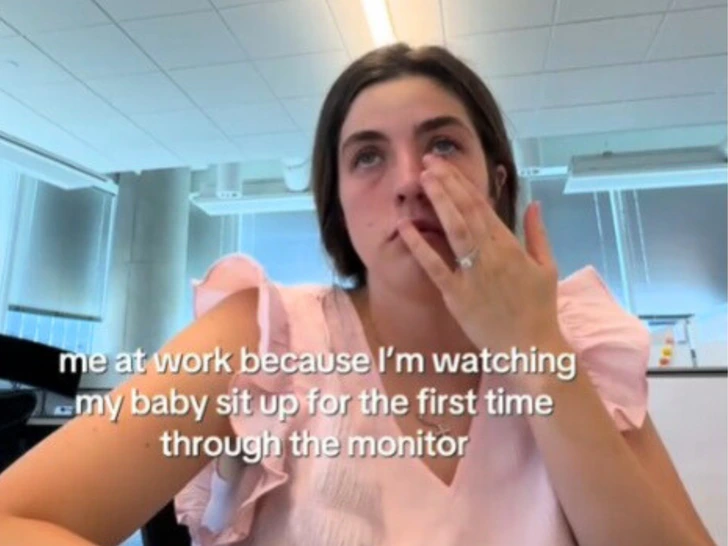
Bringing a new baby into the world is both deeply emotional and physically taxing — and for many mothers, the challenge is made even harder by the need to return to work soon after giving birth. A recent viral video has struck a chord online by illustrating just how painful that reality can be.
In the clip, a mother sits at her desk in tears, watching her baby on a monitor. The moment, captured by TikTok user @adayinaeats, has gone viral — and sparked a wave of conversation about the pressures working moms face.
Her caption read:
“Being a working mom is so much harder than I could’ve imagined. Missing the milestones just breaks me.”
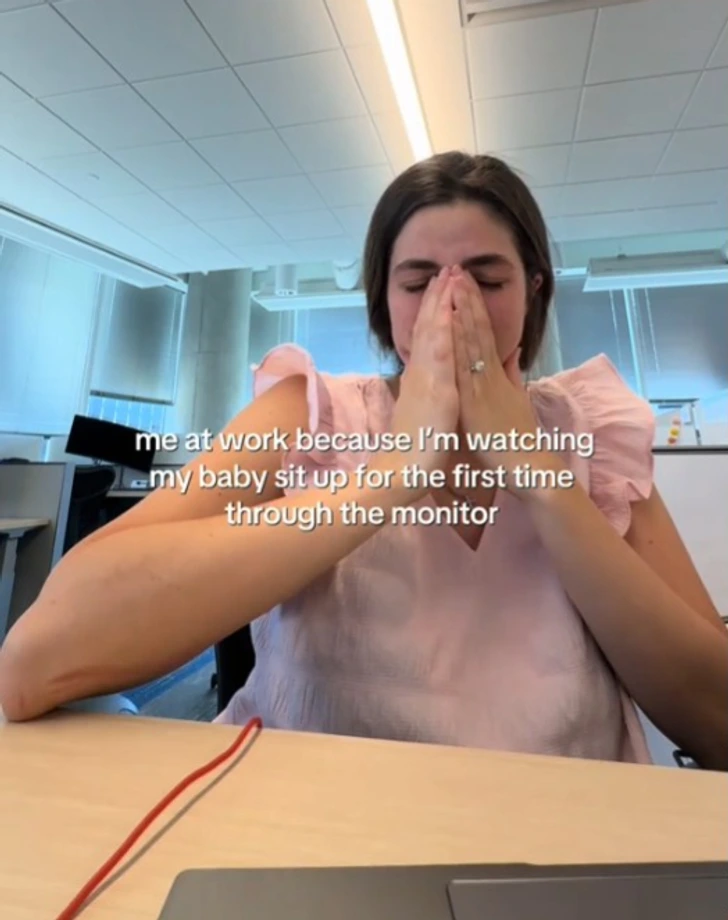
Her words resonated with thousands of mothers who feel torn between career obligations and witnessing their baby’s first precious moments — like sitting up for the first time — which often happen while they’re at work.
This experience is far from rare. Many moms are expected to return to the workforce just weeks or months after giving birth. With both parents working full-time in many households, continuing a career isn’t always a choice — it’s a financial necessity. And while some women can afford longer maternity leave, for many, extended time off remains an unattainable luxury.
The emotional video quickly drew a flood of supportive comments from people calling for better systems to support working moms.
@adayinaeats Being a working mom is so much harder than I could’ve imagined. Missing the milestones just breaks me 💔 #workingmom #babygirl #youngmom #corporatemom #motherhood ♬ som original – 𝙫𝙞𝙘𝙠𝙞𝙚★
“We were NOT supposed to live like this,” one person wrote.
Another added, “One year of paid maternity leave NEEDS to be the standard. I’m glad women are getting louder about this.”

Some suggested that remote or hybrid work options could help relieve the strain by allowing parents more flexibility during those crucial early months.
However, not all reactions were sympathetic. A few users argued that financial independence takes precedence.
“I’d rather have a mom who’s self-sufficient than one who’s always around but can’t support herself,” one person commented.
Others said they would only consider motherhood if they had a partner able to financially support them so they could stay at home full-time.
The viral moment has reignited an ongoing and complex conversation: What does it mean to be a good mother in today’s world? And how can society better support women navigating the difficult balance between career, financial stability, and raising children?


