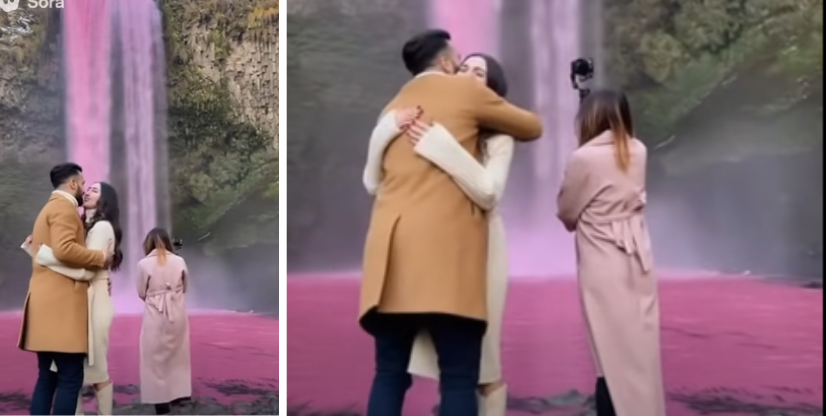
In early October 2025, a gender reveal celebration in Armenia took an unexpected and surreal turn. The famed Shaki Waterfall in Syunik Province—normally a crystal cascade of pure water—suddenly glowed pink. What was meant to be a joyful announcement that an expecting couple was welcoming a baby girl quickly evolved into a heated debate about environmental ethics, cultural traditions, and the protection of natural landmarks.
The Setting: A Jewel of Armenian Nature
Shaki Waterfall, located near the town of Sisian, is one of Armenia’s most breathtaking natural monuments. Standing 18 meters high, it tumbles dramatically over basalt cliffs carved by ancient lava flows. The waterfall attracts thousands of tourists each year, drawn by its powerful beauty and the sense of serenity it radiates. The water, fed by the Shaki River, sparkles against the dark volcanic rock, surrounded by lush greenery and the echo of falling water that fills the gorge below.
Designated as a protected natural site under Armenian law, Shaki Waterfall holds both ecological and cultural significance. It is part of the nation’s natural heritage—one that symbolizes purity, resilience, and the timeless connection between people and landscape. Locals often speak of it with pride, calling it a “living postcard” of Armenia’s unspoiled beauty.
The Event: Turning a Natural Wonder Pink
It was on a calm weekend afternoon when the unexpected transformation took place. Guests had gathered near the waterfall to celebrate the happy couple’s gender reveal. According to witnesses, the organizers released pink-tinted water upstream, using what they claimed was harmless food coloring to mark the moment the parents-to-be announced they were expecting a girl.
Within minutes, the crystal-clear cascade transformed into a flowing pink ribbon, shimmering under the sunlight. The crowd cheered, balloons floated skyward, and phones recorded every second of the spectacle. Videos of the scene quickly spread online, generating waves of fascination—and soon, outrage.
What began as a private celebration became a public controversy. While some viewers praised the creativity, others were alarmed that a protected natural site had been used as a backdrop for such an act. The initial delight gave way to questions: Was it safe? Was it legal? And should joy ever come at the expense of nature?


The Official Response: An Investigation Begins
The Ministry of Environment responded swiftly after receiving numerous reports from concerned citizens. Within hours, officials arrived at the site to collect water samples and assess any potential damage. Environmental experts were tasked with determining whether the dye had affected aquatic life, local flora, or downstream water quality.
In a public statement, the ministry reminded citizens that Shaki Waterfall is a registered natural monument and thus falls under Article 19 of Armenia’s Law on Specially Protected Areas. Under this law, any activity that alters or threatens the integrity of such sites—no matter how temporary—is considered an offense.
Authorities confirmed that an administrative case had been opened. Those responsible could face fines or legal penalties depending on the extent of the environmental impact. As of mid-October, the results of laboratory analyses were still pending, but officials emphasized that even symbolic acts of interference could set a dangerous precedent.
The Backlash: Between Awe and Anger
The images of the pink waterfall spread rapidly across social media, sparking fierce debate among Armenians at home and abroad. On one side, some users called the act “harmless fun” and “a creative way to celebrate life.” They argued that since food dye is non-toxic and biodegradable, the reaction was overblown.
However, the majority saw the stunt as a reckless display of ignorance and privilege. “You don’t need to paint nature to make a moment beautiful,” one Facebook user wrote. “This isn’t creativity—it’s disrespect.”
Environmental organizations issued statements condemning the act, emphasizing that good intentions do not justify ecological harm. “Even if the material used was safe for human consumption, the ecosystem of a natural waterfall is delicate,” said Lilit Ghazaryan, an environmental scientist from Yerevan. “What might be harmless in a kitchen can behave differently in running water. It can affect microorganisms, water pH, and oxygen balance.”
The event became a mirror reflecting a deeper societal tension between modern social media culture and environmental responsibility.
A Symbol of a Larger Issue
Gender reveal parties themselves have long been controversial, not just in Armenia but globally. Originating in the United States in the late 2000s, they have evolved from modest family gatherings to elaborate public spectacles involving fireworks, smoke cannons, drones, and even pyrotechnics—some of which have led to forest fires and accidents.
In Armenia, the trend arrived more recently, driven largely by Instagram culture and the desire to create picture-perfect moments. Over the past few years, cafes, event planners, and influencers have embraced gender reveals as a growing market, offering everything from custom cakes to colored fountains.
Yet, the Shaki Waterfall incident marked a new level of excess. “We are witnessing a cultural clash between traditional respect for nature and imported habits of showmanship,” noted cultural historian Vahagn Petrosyan. “In Armenian folklore, rivers and waterfalls are seen as sacred. To alter their appearance, even temporarily, can be interpreted as an act of hubris.”
Environmental and Ethical Implications
While the environmental investigation is ongoing, experts warn that even short-term alterations to natural monuments can have long-term consequences. The dye, regardless of its source, might leave chemical residues, affect aquatic insects or plants, and disturb the natural flow of nutrients.
Beyond the ecological impact lies a broader ethical concern. Allowing one group to use a protected site for a personal event raises questions of equity and enforcement. If such actions go unpunished, others might feel emboldened to use national parks, lakes, or monuments for similarly invasive celebrations.
As eco-lawyer Arman Simonyan explained:
“Our laws exist to protect what belongs to everyone. The waterfall isn’t private property—it’s part of Armenia’s shared heritage. When individuals interfere with it for personal gain or publicity, they’re taking something from the public.”
Social Media: The Double-Edged Sword
Ironically, it was social media that both created and condemned the incident. The same platforms that encouraged the spectacle by rewarding visibility also amplified public outrage. Within hours, hashtags like #ShakiWaterfall and #ProtectNatureArmenia were trending across Armenian Twitter and Instagram.
Dozens of users shared side-by-side images: one showing the natural blue-gray shimmer of the waterfall, the other the pink-stained version, captioned “This is not celebration—this is vandalism.” Environmental influencers began using the story as a case study in digital activism, urging followers to think twice before prioritizing aesthetics over ethics.
A Turning Point for Environmental Awareness
If there’s a silver lining to the controversy, it’s that it sparked renewed public interest in environmental protection. Schools and eco-clubs began organizing discussions about the balance between joy and responsibility. Several travel bloggers who had once promoted Shaki as a photo hotspot started posting reminders about its protected status.
The Ministry of Environment has since proposed installing informational signage near natural landmarks, warning visitors about legal restrictions and emphasizing respect for the environment.
Reflections: Joy, Responsibility, and the Meaning of Celebration
At its core, the Shaki Waterfall incident is not just about one pink cascade—it’s about how modern society defines celebration. In a world where every moment is shared online, the pressure to create something unique and visually stunning can override common sense.
As psychologist Dr. Mariam Khachatryan observed, “We live in an age of performance. People no longer celebrate for themselves but for an audience. The more dramatic the reveal, the more validation they receive. Unfortunately, that sometimes means crossing boundaries—moral, legal, and environmental.”
For many Armenians, the pink waterfall will now serve as a reminder that joy should never come at the expense of respect—for nature, for heritage, or for future generations.
Conclusion: The Color That Faded but the Lesson That Remains
The Shaki Waterfall has since returned to its natural state, the pink tint washed away by new rains and the steady rhythm of time. But the debate it sparked continues to ripple through Armenian society.
What started as a moment of excitement ended as a national reflection on responsibility. In trying to color their joy, the organizers inadvertently colored a country’s conscience.
Perhaps the lesson from this episode is simple yet profound: Nature is already beautiful enough. It doesn’t need our paintbrush—it needs our protection.


