A woman who struggled with a severe facial abnormality, which made eating painful and caused her to accidentally bite her own skin, has finally undergone life-changing surgery to reduce the growth.
Starrina, from Arizona, shared her hopes for treatment when she appeared on Botched By Nature. She revealed that she had long been diagnosed with a hemangioma by another doctor, but the medical team led by Drs. Paul Nassif and Terry Dubrow discovered she had actually been misdiagnosed for three decades.
“This is a misdiagnosis,” Dr. Nassif explained, noting that Starrina’s condition was in fact a vascular malformation, where blood pools in the area rather than shrinking naturally like a hemangioma.



After confirming the correct diagnosis, the doctors outlined a two-step plan to reduce the growth. The first stage involves embolization, in which foam is injected to block blood flow in the vessels feeding the growth. The second stage requires surgery to physically remove as much of the abnormal tissue as possible.
Dr. Nassif warned that the operation carried risks: “This is very challenging. There’s a chance of nerve damage, bleeding, and additional scarring. Nothing about this is easy, and in Starrina’s case, it’s especially risky.”


Despite the potential complications, Starrina was determined to proceed. “I feel like I’ve been waiting for this my entire life. I’m just excited for the future,” she said.
To ensure the best results, Dr. Nassif brought in vascular malformation specialist Dr. Greg Levitin. During the surgery, they began by removing a triangular section of tissue from her lower lip and carefully excised as much of the abnormal growth as possible from inside her mouth.
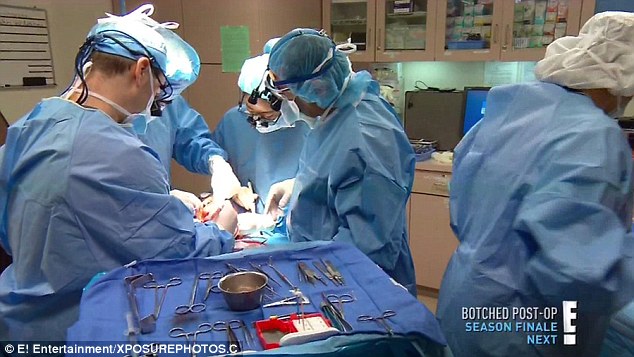
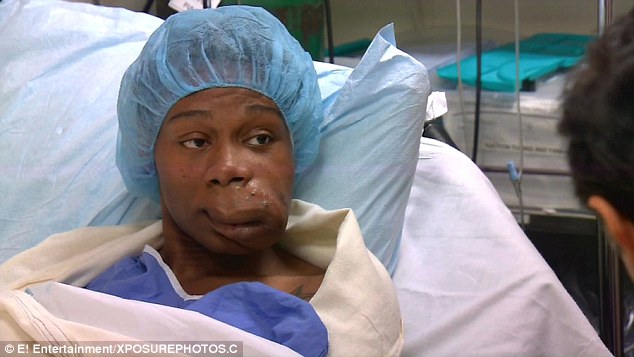
The results were dramatic. Dr. Nassif reported that Starrina’s face appeared approximately 75 percent improved immediately after the procedure. She later underwent a second embolization about six weeks later. By her follow-up three months afterward, Starrina described the results as “amazing,” with Dr. Nassif noting, “Treating a condition that has developed over 30 years is never a quick process, but we’ve made significant progress.”