
The loss of a child is an indescribable pain — a hollow ache that swallows everything, an abyss that no one can truly understand unless they’ve fallen into it themselves. Claire never thought she’d live to experience such agony.
Her daughter, Charlotte, had been only eighteen — radiant, impulsive, and endlessly curious about the world. She loved painting, late-night movies, and leaving notes all over the house: “Don’t forget milk,” “Love you, Mom,” “Dad, stop working!” But now those notes were silent relics of a life that had ended too soon.
Charlotte’s death had come suddenly — a rainy evening, slick roads, a car skidding out of control. The police said it was an accident. Claire could barely remember the days that followed — the funeral, the faces of people offering condolences, the empty platitudes that filled the air like static.
But even through her fog of grief, something inside her felt wrong. The details didn’t add up.
Her husband, Louis, was distant — too distant. He didn’t weep, didn’t tremble, didn’t break down like she did. Instead, he moved through the house like a man on a mission, speaking only when necessary, his eyes darting away whenever hers searched for comfort.
“Claire,” he said one evening, his tone flat, almost businesslike. “We need to clean out Charlotte’s room. Sooner rather than later.”
She looked at him, horrified. “Clean it out? Louis, she’s only been gone for a week.”
“I know,” he said quietly, not meeting her eyes. “But it’s better this way. For you. For both of us.”
He turned and left the room before she could answer.
Claire sat alone in silence, the hum of the refrigerator echoing through the house. Something in his voice chilled her — not grief, but urgency. Why was he so eager to erase every trace of their daughter?
That night, she walked into Charlotte’s room. The air still smelled faintly of her perfume — lavender and citrus. The bed was neatly made, the way Charlotte always kept it, except for a single backpack left on the chair by the window. Claire unzipped it slowly. Inside were school notebooks, a hairbrush, and a folded piece of paper.
The note was addressed to her:
“Mom, if you’re reading this, look under my bed. You’ll understand.”
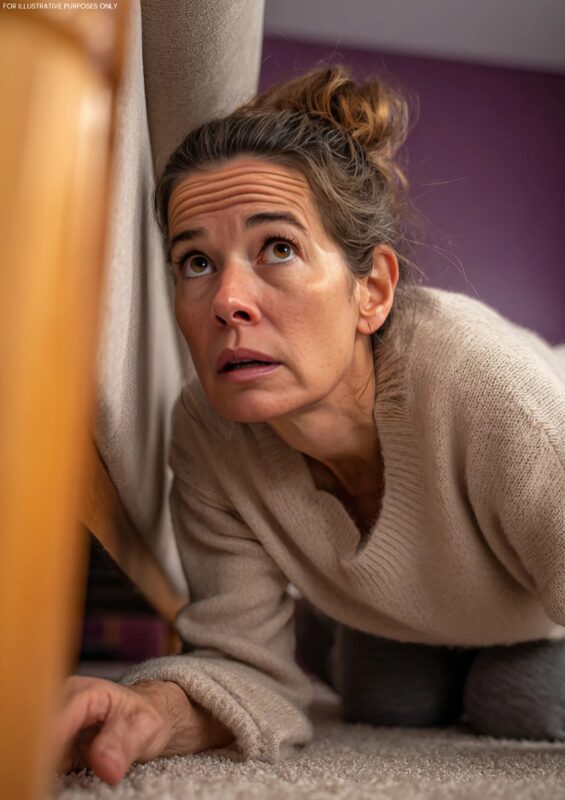
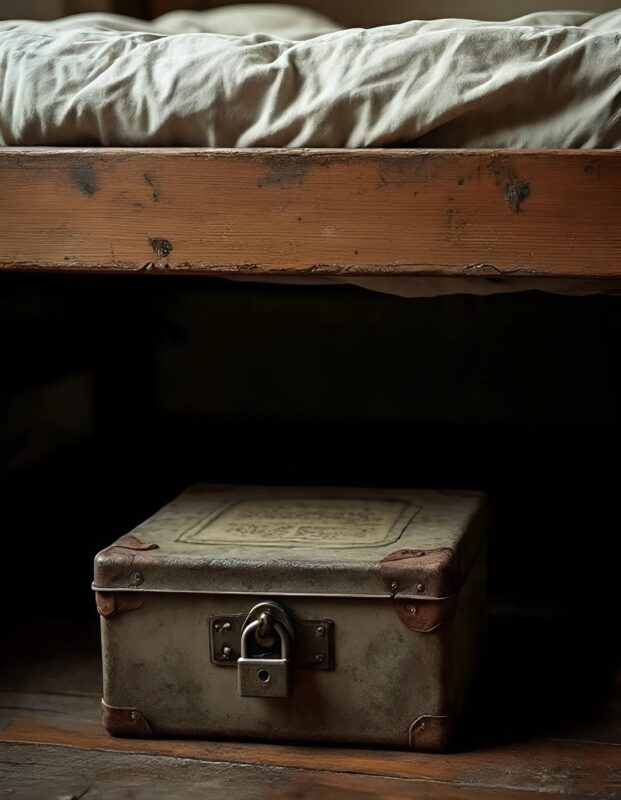
Her heart began to hammer. Hands trembling, she dropped to her knees and pulled out a small wooden box covered in dust. Inside were documents, printed emails, bank statements, and photographs. Her eyes scanned the papers — car insurance policies, financial records in Louis’s name, and a series of messages between him and a man she didn’t recognize.
Her stomach turned cold. The messages discussed a payout. A plan. The “accident.”
She sat on the floor, clutching the box, her mind spiraling. No. It couldn’t be. Charlotte’s death had been tragic — but not deliberate. Not this.
When Louis came home, he found her sitting at the dining table, staring at the papers spread out before her.
“What is this?” she demanded, her voice shaking.
He froze, eyes narrowing. “Where did you get that?”
“Answer me!”
He stepped closer. “Those are business documents. You don’t understand.”
“Business?” she spat. “You staged your daughter’s death for money?”
His expression hardened. “Be careful what you accuse me of.”
That evening, over dinner, Louis poured her a glass of wine. His demeanor had shifted — gentle, almost apologetic. “I know you’re grieving,” he said softly. “You’re imagining things. You haven’t slept in days.”
He slid a small bottle of pills across the table. “Take these. They’ll help.”
Claire stared at him. Her instincts screamed. She lifted the glass, pretended to swallow the pills, then excused herself. In the privacy of her room, she spat them into a tissue — small, white, unmarked tablets. Her pulse pounded.
She took photographs of the documents with her phone and sent them to a private email she’d once used to contact an old friend — Sam Walker, a retired detective.
“Sam,” she wrote. “It’s Claire. I need help. I think Louis killed Charlotte.”
The next morning, she met Sam at a café downtown. He was older now, grayer, but his eyes still sharp. She showed him the photos, her hands trembling as she scrolled through the evidence.
Sam read silently, then looked up. “If this is real, it’s not just fraud. It’s murder.”
He gave her a small recording device. “Keep this on you. Try to get him to talk. Don’t confront him again. Just record.”
Claire nodded, fear rising in her chest.
When she returned home, the house was eerily quiet. She went straight to Charlotte’s room — and froze. The box was gone. Every drawer had been emptied.
“Looking for something?” Louis’s voice came from behind her. He stood in the doorway, holding the documents. His eyes were cold, expression unreadable.
“You shouldn’t have done that, Claire.”
She stepped back. “What are you going to do?”
He smiled faintly. “You’ll take your medicine tonight. You’ll rest. Everything will be fine.”
Her phone buzzed in her pocket — a message from Sam: You okay?
She typed quickly, Help. Room. Locked.
Louis reached for her arm. “Claire, stop this. You’re not well.”
But before he could continue, the sound of sirens filled the street.
Louis turned toward the window, startled. A moment later, the door burst open. Sam entered with two officers, their flashlights sweeping the room.
“Louis Harris, you’re under arrest,” one of them barked.
Louis tried to run, but the officers tackled him. The documents scattered across the floor like snow. Claire sank to her knees, sobbing as Sam helped her up.
“It’s over,” he said gently.
But it wasn’t.
A week later, Claire stood in Charlotte’s room again. The police had taken the box, the letters, everything. Only the smell of lavender lingered.
Sam called to check in. “They confirmed it,” he said. “He took out an insurance policy in Charlotte’s name six months ago. There were payments to someone who tampered with the car. He’ll never get out.”
Claire listened in silence.
“Justice is served, Claire,” Sam added softly.
She looked at Charlotte’s photo on the wall — her smile frozen in time. “Justice doesn’t bring her back,” she whispered.
Outside, the sun dipped below the horizon, painting the sky in violet and gold. The house felt too large, too empty. She sat on the edge of the bed, tracing her fingers along the wood, remembering her daughter’s laughter.
The pain would never fade completely — but now, at least, she knew the truth.
She whispered to the photograph, “You saved me, sweetheart. Even after you were gone.”
For a moment, she thought she could almost hear Charlotte’s voice, soft and warm: “I love you, Mom.”
Claire closed her eyes as the first stars appeared above the darkening sky.
Her life would never be the same — but for Charlotte’s sake, she would keep going. One step, one sunrise at a time.


