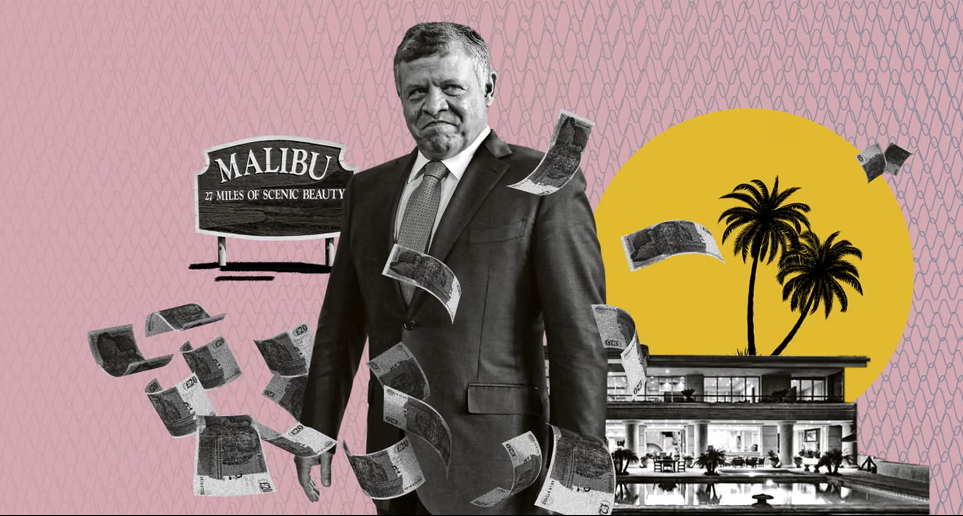
The Abdullah II of Jordan has secretly accumulated a global property portfolio worth more than $100 million, according to findings from the International Consortium of Investigative Journalists’ Pandora Papers investigation. Documents shared with outlets including The Guardian reveal that the Arab world’s longest-serving current monarch used a network of offshore companies registered in the British Virgin Islands to conceal his ownership of luxury homes in the United States and the United Kingdom.
The revelations cast fresh light on a sensitive topic inside Jordan, where discussion of the king’s personal wealth has long been taboo. In 2019, lawyer Moayyad al-Majali was detained after publicly asking how much land the monarch owned — an illustration of how politically delicate the issue remains in a country heavily reliant on foreign aid and grappling with high unemployment and years of austerity measures tied to International Monetary Fund programs.

Among the most striking purchases is a $33.5 million clifftop mansion in Malibu, described as a sprawling 26-room estate overlooking the Pacific. The king also quietly bought neighboring properties, along with multimillion-dollar residences in Washington, D.C. and a collection of high-end homes in London’s Belgravia district. The UK properties alone are estimated to be worth around £28 million today.

While using offshore structures to buy property is not illegal and can serve privacy or security purposes, the secrecy surrounding these acquisitions has prompted questions — particularly given the scale of Western financial assistance to Jordan, which has received billions in U.S. aid over the past two decades.

The king’s legal team has firmly denied any wrongdoing, stating that his personal wealth does not derive from public funds and that he has never misused state or aid money. Nonetheless, the disclosures have intensified scrutiny of royal finances at a time when many Jordanians face economic hardship and rising living costs.


