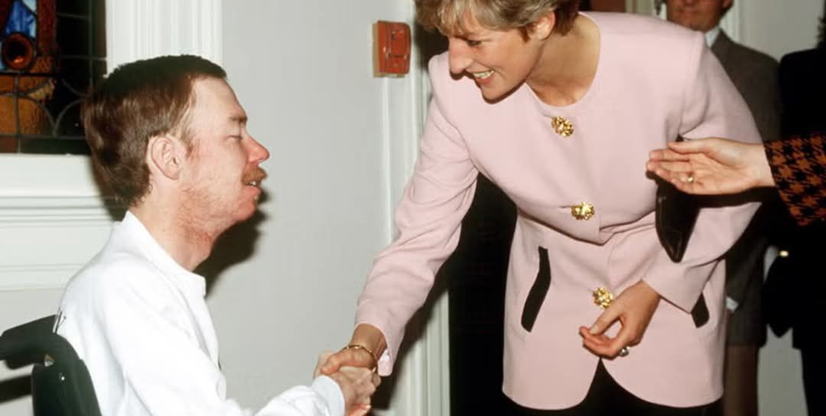
In 1991, Princess Diana transformed global understanding of HIV/AIDS with a single, compassionate gesture. During a visit to Casey House in Toronto — a hospital dedicated to caring for people with HIV/AIDS — she greeted a patient with an ungloved handshake. The moment seemed simple, almost ordinary. Yet at a time when fear, misinformation, and stigma surrounded the disease, her action became a turning point in public perception worldwide.
In the early 1990s, many still believed HIV could be transmitted through casual contact. Misconceptions were widespread: people avoided touching, hugging, or even being near those diagnosed with the virus. Patients were often isolated, treated with fear, pity, or outright rejection. Many felt abandoned not only by society but sometimes by their own families. Diana’s decision to offer a warm, bare-handed greeting sent a message louder than any speech: HIV is not spread through touch, and people living with the virus deserve dignity, respect, and compassion.

The photograph of that moment traveled across the globe, challenging long-held prejudices and confronting public fear head-on. It reminded the world that behind every diagnosis is a human being — someone with emotions, hopes, and inherent worth.
Diana’s advocacy did not begin nor end with that visit. In 1987, she helped open the UK’s first HIV/AIDS ward, at a time when even governments hesitated to publicly address the crisis. She continued to meet with patients, comfort families, and use her influence to break down the walls of stigma. Her actions humanized a misunderstood disease and empowered countless people to show empathy instead of fear.
Princess Diana proved that true greatness is not measured by titles or royal heritage, but by courage, kindness, and the willingness to stand with the marginalized — even when the world looks away.


